


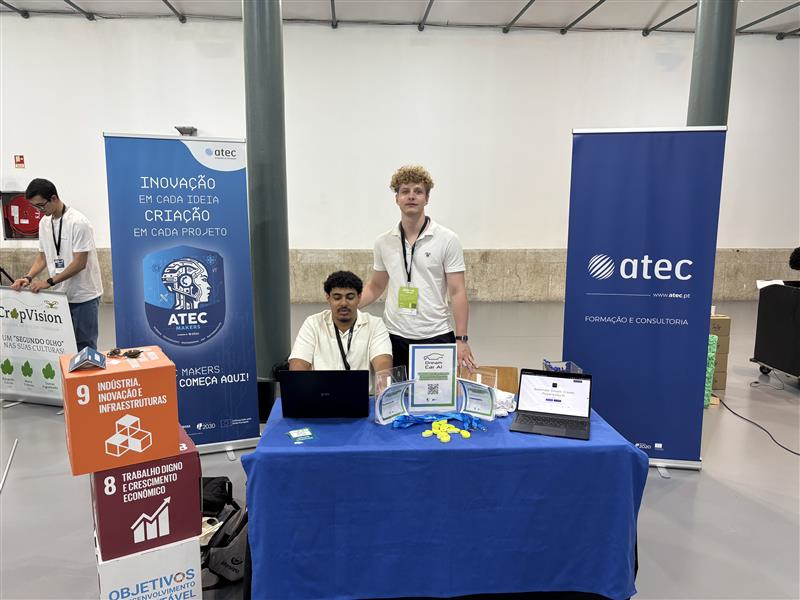
Bringing AI-ENTR4YOUTH to ATEC: How Level 4 Programming Students Learned to Innovate with AI
Insights from the classroom, through the eyes of learners and teachers
Branding final project brought to National competition
Introducing the project at ATEC
This year, ATEC integrated the “AI-ENTR4YOUTH; Blending AI and Entrepreneurship Education for Youth” programme funded by European Commission into the Level 4 Programming course, taking a significant step towards preparing young people for the digital and innovation-driven future ahead. The initiative, coordinated by JA Europe and supported by Erasmus+ programme, aims to empower learners with foundational artificial intelligence knowledge while nurturing entrepreneurial skills.
At ATEC, the programme was implemented over several weeks through a combination of theory, hands-on exploration, teamwork, and project development. Students were introduced to AI concepts and then challenged to transform what they learned into practical applications.
How students experienced the programme
Quotes from the classroom
“I always thought AI was something only big companies worked with. This project showed me it’s actually something we can experiment with—even as students.”
“The best part was creating a real and concrete idea with my team. It didn’t feel like theory; it felt like building something that could help people and innovate.”
For many learners, AI-ENTR4YOUTH was their first interaction with artificial intelligence beyond what they see online. The initial uncertainty quickly shifted to curiosity and excitement as they experimented with datasets, explored tools, and began shaping their own solutions.
Seeing their ideas evolve into prototypes strengthened their confidence and demonstrated that innovation is not only for experts—it is accessible, hands-on, and within their reach.
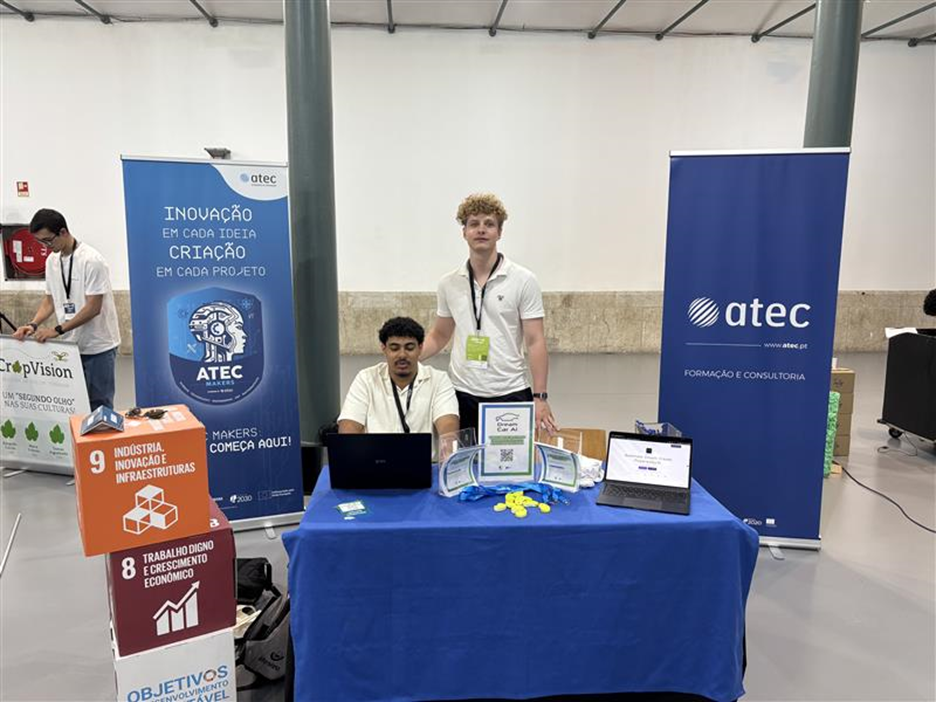
Live demo of the project
The teacher’s perspective
Teachers also experienced meaningful growth through the programme. Combining AI and entrepreneurship required collaboration and a fresh approach to teaching.
One instructor reflected:
“This project pushed us to leave our comfort zone. It showed that programming education can be more than code—it can be creativity, business thinking, and problem-solving.”
The shift towards project-based learning encouraged experimentation and a more dynamic classroom environment where students took the lead.
Skills developed throughout the programme
🧠 Technical competences
- Understanding AI fundamentals
- Exploring real-world use cases
- Learning ethical principles and responsible AI
- Experimenting with beginner-friendly data tools
💡 Entrepreneurial and transversal competences
- Identifying needs and opportunities
- Teamwork and collaborative decision-making
- Pitching and presenting prototypes
- Creative and critical thinking
- Project organisation and iterative development
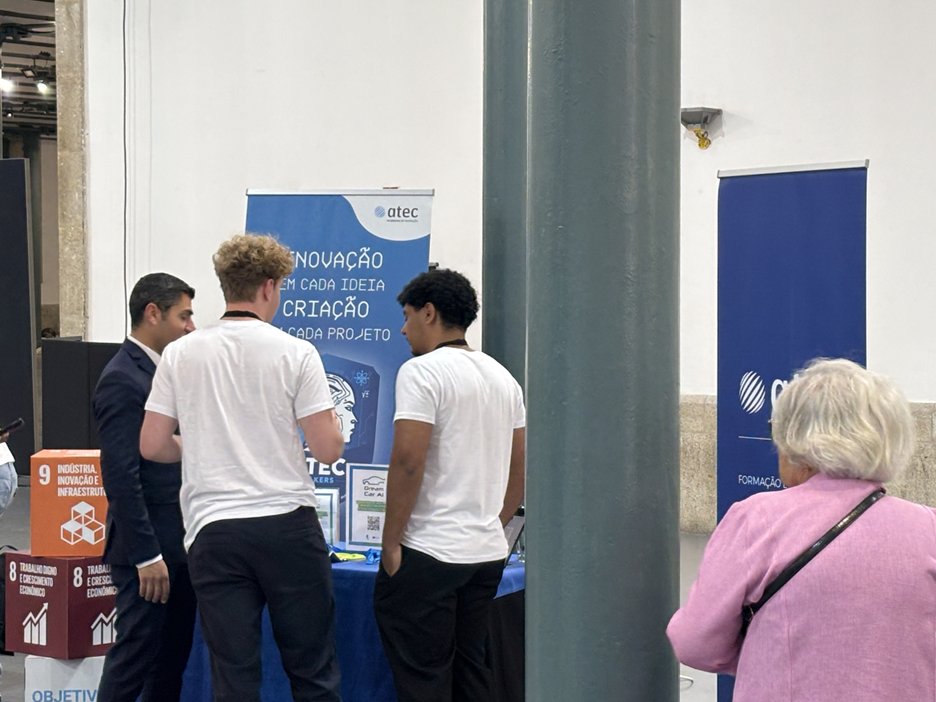
Prototype showcase
Local activities and success stories
The programme inspired several creative solutions. Examples include:
- A chatbot for programming support — designed to assist new students with common questions.
- A learner progress tracking tool — a concept aimed at helping teachers monitor attendance and skill development.
Not all teams reached a fully functional prototype, but the quality of ideas, teamwork, and research demonstrated remarkable learner engagement.
A key takeaway was the need to adapt the training pace. Balancing AI and entrepreneurship with a regular VET curriculum requires careful scheduling and time for reflection.
Community feedback and broader impact
“I want to keep learning AI now. Before this project I had no idea where to start, and now I feel like I have a path.”
Teachers reported that the initiative helped modernise the learning experience, aligning it with industry expectations and improving students’ readiness for future careers.
The positive reception also sparked interest from other ATEC courses, encouraging a broader integration of AI-related modules across the institution.
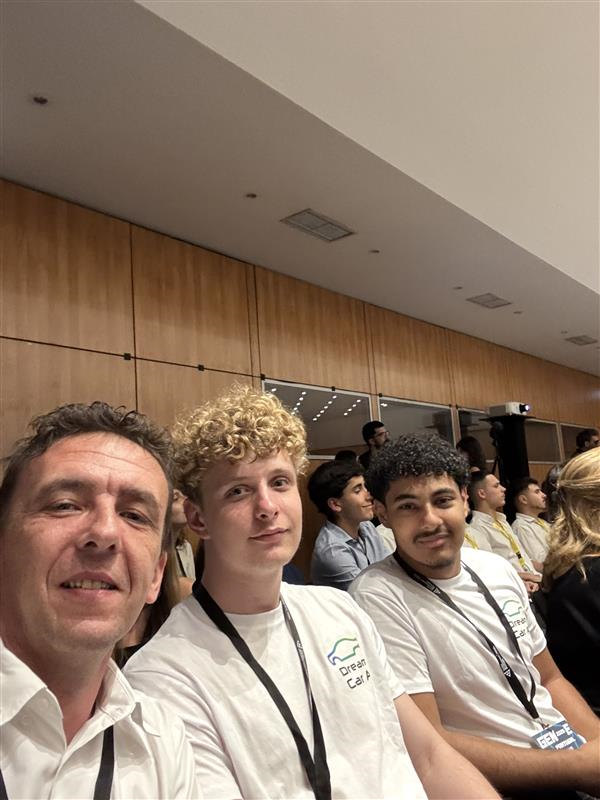
Students and teacher at the end of the programme
Final reflections
Implementing AI-ENTR4YOUTH at ATEC proved to be a transformative experience for students and teachers alike. Beyond learning about artificial intelligence, students developed the mindset and confidence needed to solve real problems, innovate, and collaborate.
The programme demonstrates that vocational education can be a driving force in shaping Europe’s next generation of digital creators. With continued support and refinement, this model can be expanded to other courses within ATEC and serve as inspiration for VET centres across Portugal and Europe.