


Description: As Europe begins a new academic year, policymakers, educators and employers are looking beyond skills development towards a new challenge: ensuring that future-ready competences are recognised, valued and connected to opportunity.
As students, apprentices and lifelong learners across Europe return to classrooms and training programmes this autumn, an important question is gaining renewed urgency: are we equipping young people with the skills they need to thrive in a rapidly changing world?
Amid digital transformation, the green transition and growing global competition, skills development has become a strategic priority for Europe. Employers increasingly look beyond academic qualifications, seeking people who can adapt, communicate effectively, collaborate across disciplines, solve problems and continue learning throughout their careers.
The challenge is no longer only about helping young people develop these skills. It is also about ensuring that the competences acquired through formal, non-formal and experiential learning can be demonstrated, validated and understood by employers, education providers and policymakers.
This conversation sits at the heart of Erasmus Days 2026, highlighting the role of education, cooperation and skills development in preparing learners for the opportunities and challenges ahead.
From Skills Development to Skills Recognition
While significant investments have been made across Europe to support skills development, a persistent challenge remains: how can learners effectively demonstrate the competences they have acquired, particularly those developed through experiential, non-formal and work-based learning?
Addressing this challenge is the mission of EMPASS, an Erasmus+ project coordinated by JA Europe. EMPASS seeks to make employability skills more visible and recognised through innovative approaches to their assessment and validation.
At the centre of the project is the EmPass Micro-Credential, designed to help young people identify, develop, assess and showcase key competences for the workplace. By providing a structured way to document skills gained through different learning experiences, EMPASS contributes to strengthening the connection between education and employment.
The 11 Skills at the Heart of EMPASS
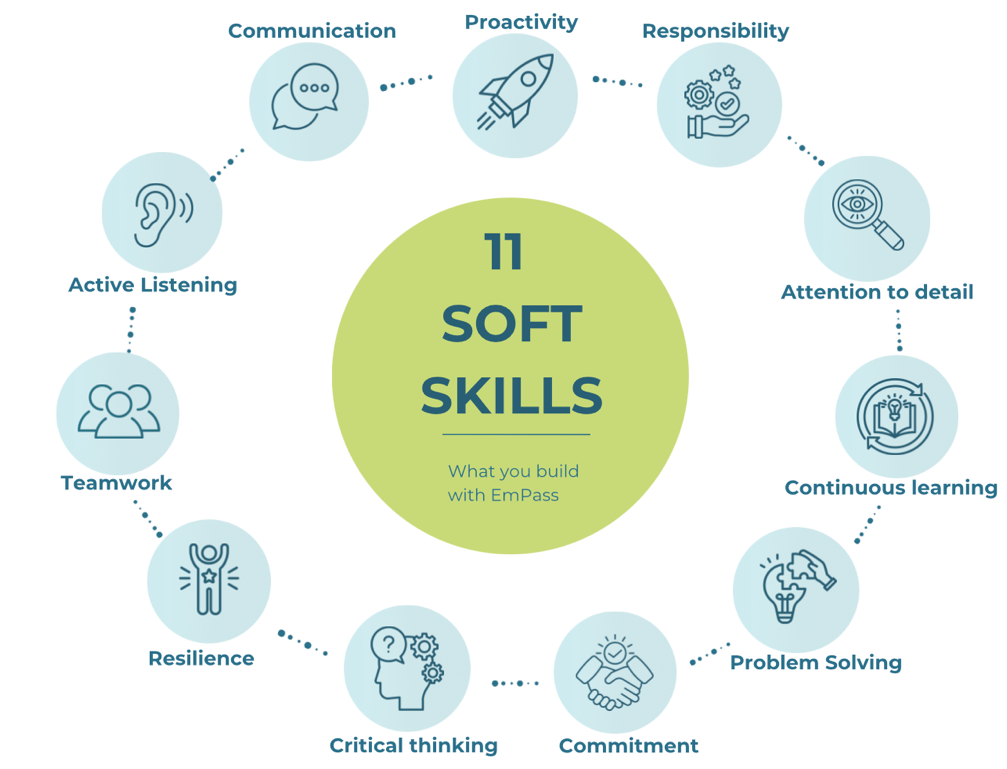
The EMPASS framework focuses on 11 employability skills organised across three areas: Action and Results, Interpersonal Skills and Personal Effectiveness. These competences reflect the skills employers increasingly seek in a changing labour market.
Action and Results
- Problem Solving – identifying challenges and finding effective solutions.
- Attention to Detail – ensuring accuracy, quality and consistency in work.
- Commitment – demonstrating dedication, reliability and responsibility.
Interpersonal Skills
- Active Listening – understanding others through attentive and empathetic listening.
- Communication – conveying ideas clearly and appropriately across different contexts.
- Teamwork – collaborating effectively with diverse groups to achieve shared goals.
Personal Effectiveness
- Proactivity and Enthusiasm – taking initiative and seeking opportunities for improvement.
- Responsibility – being accountable for decisions and actions.
- Critical Thinking – analysing information and making informed judgments.
- Continuous Learning – embracing lifelong learning and adapting to change.
- Resilience – responding constructively to setbacks and challenges.
These competences help young people navigate changing workplaces, contribute effectively in teams and continue developing throughout their professional lives. Making these skills visible is therefore an important step towards helping learners showcase their potential and enabling employers to recognise learning wherever it takes place.
From Code to Competencies: Why Digital Skills Matter
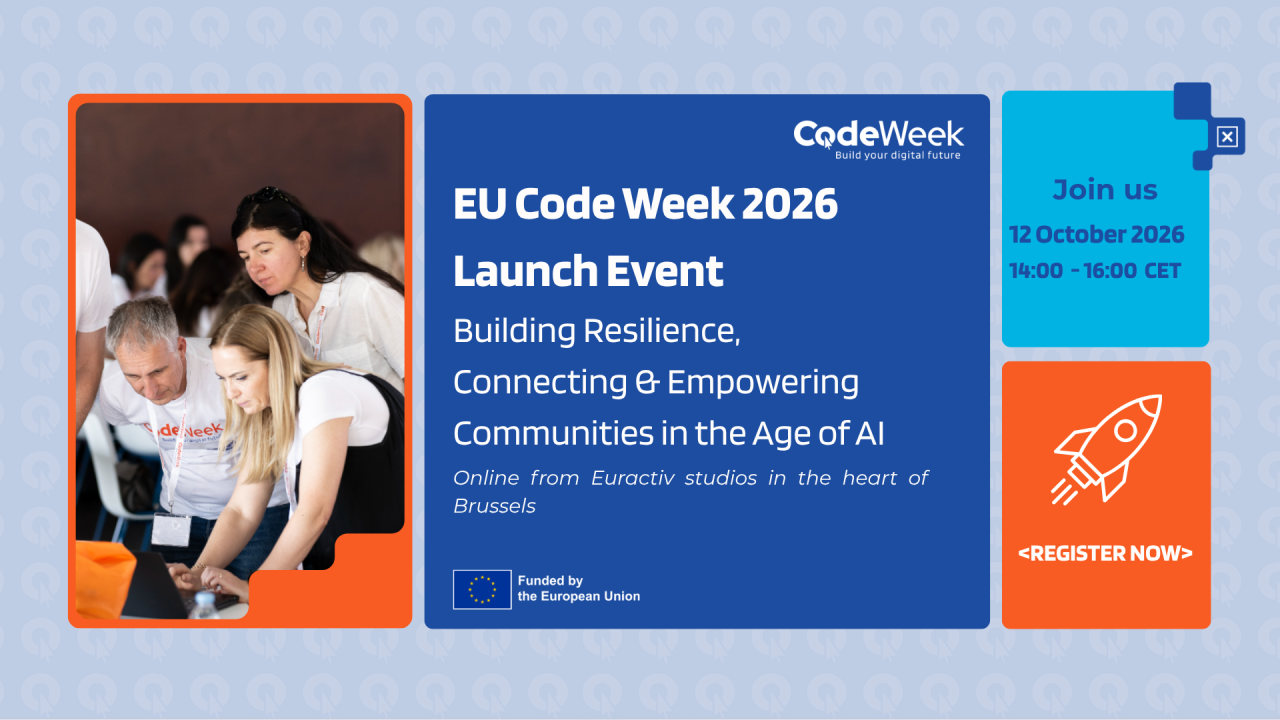
This discussion gains particular relevance in October as Europe celebrates EU Code Week, the grassroots initiative that encourages people of all ages to explore coding, computational thinking and digital creativity.
While digital skills are increasingly essential across industries, technical knowledge alone is not enough. Employers are also seeking individuals who can communicate effectively, collaborate with others, solve problems, think critically and adapt to new challenges.
Many of these competencies are reflected in the EMPASS employability framework. Whether participating in coding activities, developing digital projects or engaging in collaborative problem-solving exercises, young people are often strengthening both technical and transversal skills simultaneously.
As Europe seeks to boost innovation and competitiveness, initiatives such as EU Code Week and EMPASS demonstrate the importance of combining digital literacy with broader employability skills. Together, they help prepare learners not only for the jobs of today, but for careers that will continue to evolve throughout their lifetime.
Register here: https://codeweek.eu/blog/eu-code-week-2026-launch-event/
Building a Competitive and Inclusive Europe
Europe’s competitiveness ultimately depends on its people. Businesses need talent equipped to adapt to new technologies, work across cultures and respond to emerging challenges. At the same time, young people need clearer and more inclusive pathways from education to meaningful employment.
Skills recognition, micro-credentials and innovative learning approaches are increasingly seen as key tools in strengthening workforce readiness and supporting lifelong learning. By connecting education, industry and policy, Europe can help ensure that skills development translates into opportunity, innovation and sustainable growth.
Join the Conversation in Brussels
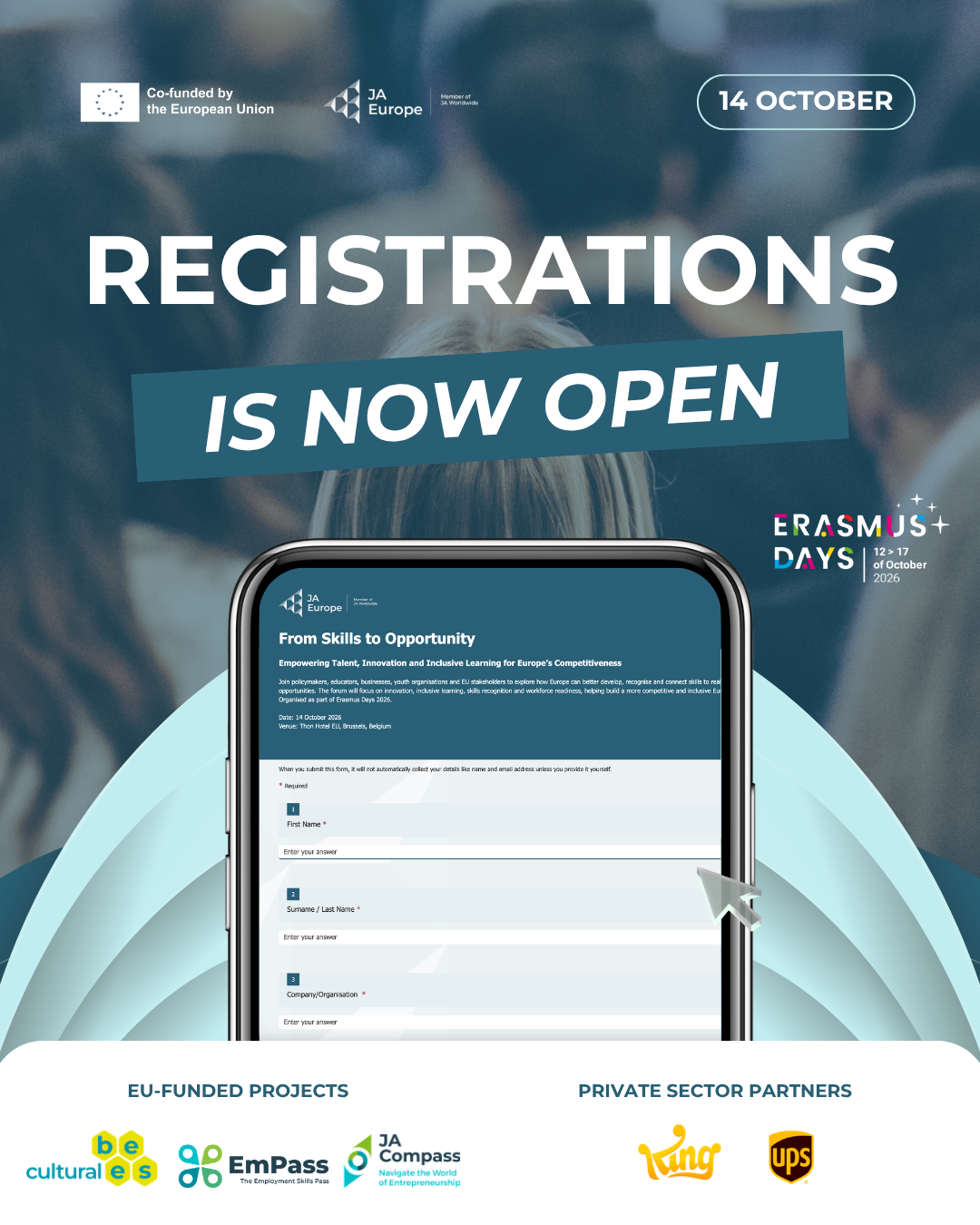
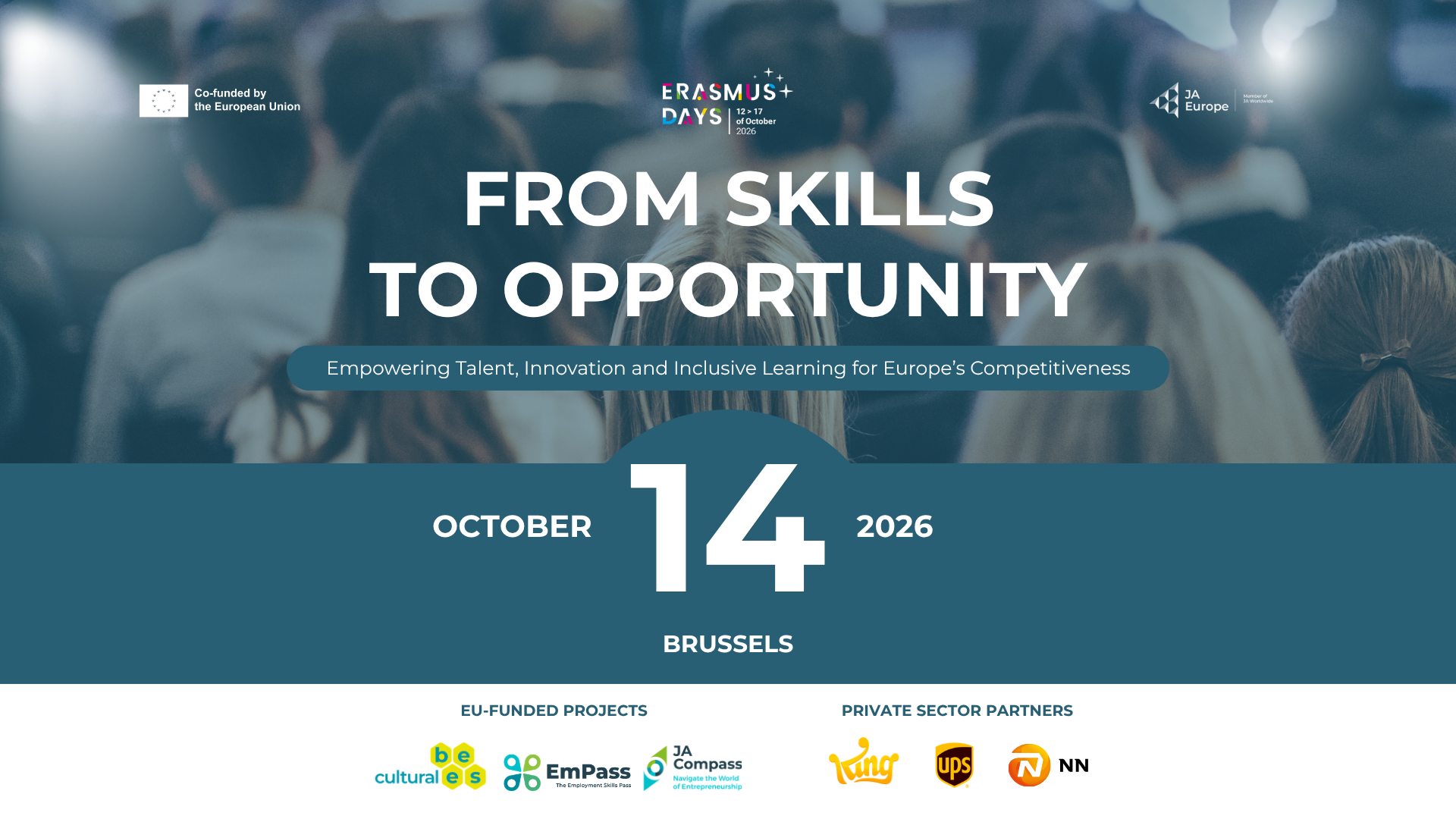
From Skills to Opportunity: Empowering Talent, Innovation and Inclusive Learning for Europe’s Competitiveness will take place on 14 October 2026 in Brussels as part of Erasmus Days 2026.
Building on the momentum of the new school year, EU Code Week and the wider European discussion on skills, talent and competitiveness, the event will bring together leading voices from education, policy, business and civil society to explore how Europe can better prepare learners and workers for the future.
Participants will engage in discussions on:
- Skills recognition and validation, including the role of micro-credentials and innovative approaches such as EMPASS in making employability skills visible.
- Digital and future-ready skills, examining how initiatives such as EU Code Week can help young people develop both technical and transversal competences needed in today’s labour market.
- Innovation in learning, showcasing how game-based learning, culture-based learning and other innovative educational approaches can contribute to talent development and inclusion.
- Education-to-employment pathways, exploring how stronger collaboration between educators, employers and policymakers can help translate learning into opportunity.
- Europe’s competitiveness agenda, discussing how skills development, lifelong learning and talent recognition can support innovation, resilience and sustainable growth.
Registration is now open. Whether you are an educator, policymaker, employer, researcher, youth organisation representative or skills advocate, we invite you to join the discussion and contribute to shaping the future of learning and workforce readiness in Europe.
👉 Register now From Skills to Opportunity – Fill out form